
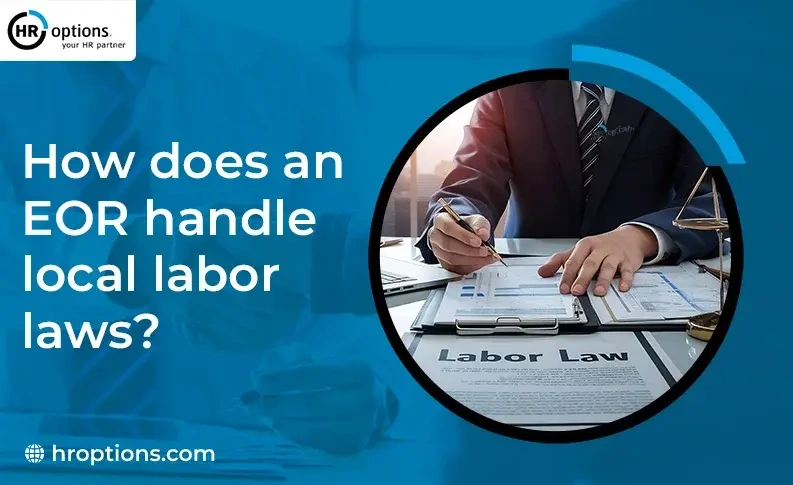
When you expand your business across borders, the biggest hurdle is usually the legal red tape. You might find yourself asking how an EOR handles local labor laws to keep your company safe from unnecessary risks. An Employer of Record essentially acts as your local legal shield by taking on the full responsibility of being the legal employer. They manage the heavy lifting of compliance while you direct the daily work of your team.
By drafting localized contracts, managing specific tax withholdings, and tracking mandatory regional benefits, an EOR makes sure you stay within the law. They also handle complex payroll tasks and monitor changing legislation to keep your operations running smoothly. It is a comprehensive approach that covers everything from initial onboarding to the final steps of an employee’s time with your company.
Ways an EOR Ensures Compliance with Local Labor Laws
Expanding into a new market brings up a lot of questions about regional rules. Here is a breakdown of the specific methods a partner uses to manage those legal requirements for you.
1. Drafting Locally Compliant Employment Contracts
A contract that works in the United States might be completely illegal in Canada or another country. An EOR creates agreements that specifically follow local rules for working hours, notice periods, and confidentiality. They ensure every clause is enforceable in a local court, which prevents disputes before they even start. This foundation is the most important part of protected hiring.
2. Managing Statutory Benefits and Leaves
Every region has its own list of must-have benefits. Some areas require 14 days of annual leave, while others have strict rules for mandatory maternity or paternity pay. An EOR tracks these requirements and ensures every employee gets exactly what they are legally entitled to. You don’t have to keep track of dozens of different regional calendars or benefit minimums because the EOR does it for you.
3. Precise Tax Withholding and Remittance
Tax laws are famous for changing without much warning. An EOR calculates the exact amount for local income tax, social security, and health insurance for every paycheck. They handle the filing and payment to local government authorities on time every single month. This keeps you from facing back taxes or penalties for incorrect filings.
4. Proactive Monitoring of Legislative Changes
Labor laws are in a constant state of flux. Whether it is a new minimum wage hike in a specific province or a change in worker classification rules, an EOR has experts watching the news. They update your policies and pay structures in real-time. This means your business is never accidentally using outdated rules that could lead to an audit.
5. Managing Compliant Offboarding and Severance
Ending an employment relationship is often a legal minefield. Many countries require specific notice periods or mandatory severance payouts based on how long a person worked. An EOR manages this entire exit process according to local regulations. They handle the paperwork and final payouts to protect you from wrongful dismissal claims.
6. Ensuring Proper Worker Classification
Misclassifying an employee as an independent contractor is a major red flag for tax authorities. An EOR evaluates every role to ensure the worker is set up correctly under local definitions. They handle the transition of contractors to full-time employees when the nature of the work changes. This prevents massive fines and protects your company’s reputation.
7. Handling Intellectual Property and Data Privacy
Different countries have different standards for who owns the work created by an employee. An EOR includes specific IP protection clauses in its localized contracts to ensure your business retains ownership of all work products. They also manage employee data according to local privacy laws, like GDPR or regional equivalents, to keep sensitive information secure.
Conclusion
Navigating the legal system of a new country is a massive commitment that requires constant attention. Understanding how an EOR handles local labor laws is the best way to scale your business without the constant fear of a lawsuit. By managing localized contracts, statutory benefits, tax remittance, and legislative updates, an EOR provides a secure environment for growth.
They also take care of worker classification, IP protection, and compliant offboarding to cover every stage of the employee lifecycle. This allows you to focus on your team’s performance while someone else manages the government paperwork. If you are looking to expand into the US or Canada and want to avoid these legal headaches, HR Options offers best EOR services to handle your complex payroll and compliance needs.
Frequently Asked Questions
What is an EOR used for?
An EOR is used to hire employees in a location where your company does not have a registered business entity. They take over the legal and administrative tasks so you can build a team quickly.
Who is an employer under the Labor Code?
Under most labor codes, an employer is the entity that pays wages and directs the work. In an EOR setup, the EOR is the legal employer on paper for tax and law purposes, while the client manages the worker’s daily output.
What are the most important labor laws?
The most critical laws usually involve the minimum wage, maximum working hours per week, mandatory holiday pay, and the legal procedures for terminating an employment contract.