
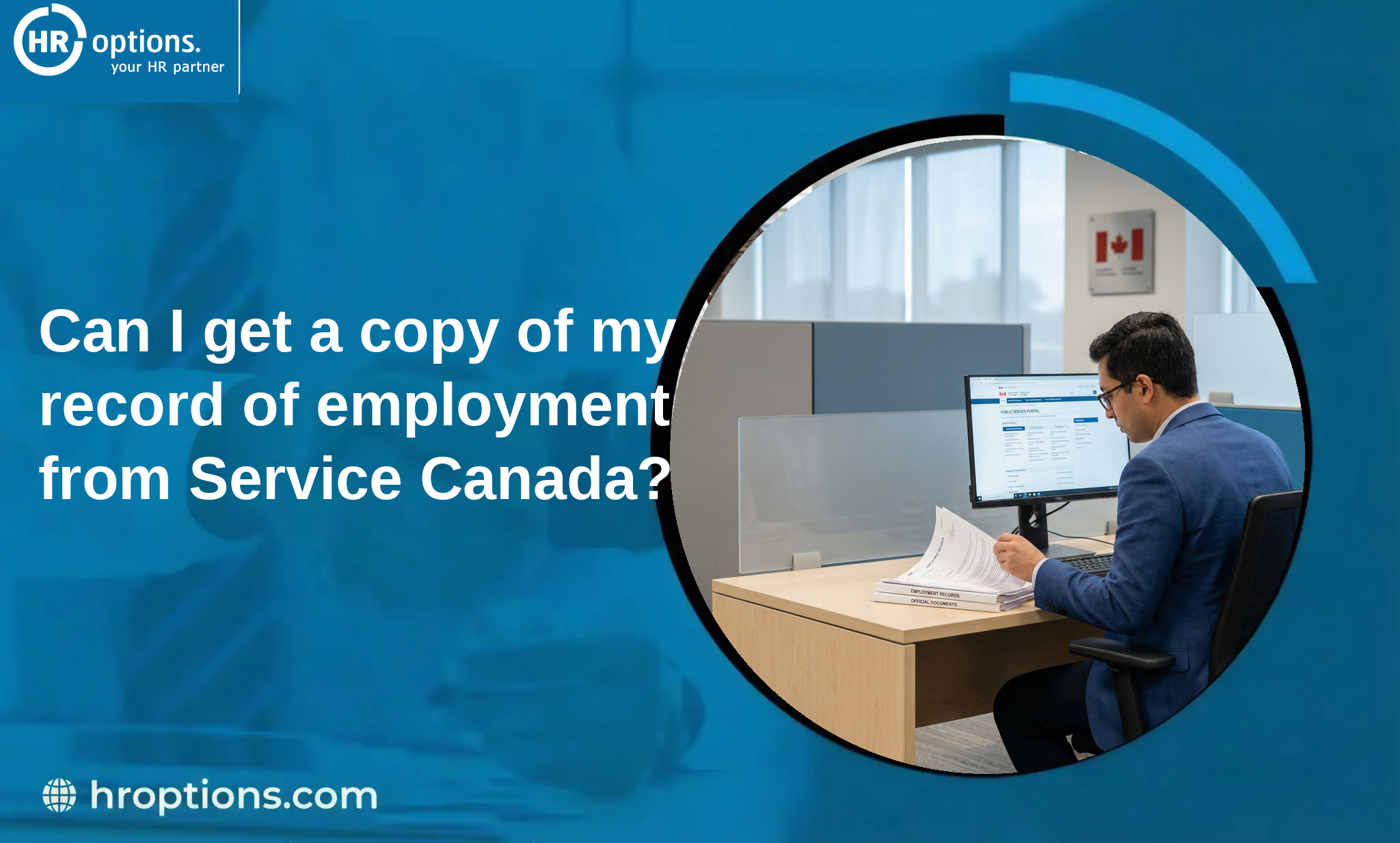
I was talking to a friend the other day who had just been laid off from a remote job with a US tech company. She was stressed out, trying to apply for Employment Insurance (EI) in Canada, and she kept asking me, “Can I get a copy of my record of employment from Service Canada?” It’s a question that comes up all the time, especially now that so many Canadians are working for international companies. Honestly, the process is usually pretty straightforward, but when you throw a foreign employer into the mix, things can get confusing fast.
When you think about it, the Record of Employment (ROE) is the single most important document you need if you lose your job in Canada. It’s the form that tells Service Canada how long you worked and how much you earned, which determines if you qualify for EI benefits and how much you’ll get. Every employer in Canada is legally required to issue an ROE when an employee stops working, whether they quit, get fired, or go on maternity leave.
How to Actually Get Your ROE
The thing is, how you get your ROE depends entirely on how your employer filed it. If your employer filed it electronically—which most modern companies do—it goes straight to Service Canada. You don’t actually need a paper copy to apply for EI. You can just log into your My Service Canada Account (MSCA) online, and it will be sitting right there in your file. It’s usually the fastest and easiest way to handle it.
But if your employer is old-school and issues paper ROEs, they have to give you a physical copy within five days of your last pay period. If they give you a paper copy, you are the one responsible for getting it to Service Canada. You have to mail it in or drop it off at a local office. If your employer is dragging their feet and won’t issue the ROE, you can actually ask Service Canada to intervene on your behalf. They take this stuff very seriously.
If you are a US company trying to figure out how to issue an ROE for a Canadian worker, don’t try to guess the rules. Give us a call at (800) 777-8944 or visit our consultation page to make sure you are compliant with Canadian employment law.
The Complication of US Employers
This is where my friend’s situation got tricky. She was working for a US company that didn’t have a legal entity in Canada. They were just paying her as an independent contractor, even though she was working full-time hours like an employee. Because she was technically a contractor, the US company never paid into the Canadian EI system, and they never issued an ROE. When she got laid off, she had no safety net. It was a brutal realization.
This happens all the time. US companies want to hire great Canadian talent, but they don’t want to deal with the hassle of setting up a Canadian corporation, registering with the Canada Revenue Agency (CRA), and figuring out the nuances of provincial labor laws. So they misclassify the worker as a contractor. It’s illegal, and it leaves the worker completely unprotected.
The EOR Solution in Canada
The correct way for a US company to hire a Canadian worker without setting up a local entity is to use an [employer of record](https://hroptions.com/employer-of-record/) in Canada. An EOR acts as the legal employer for the Canadian worker. They handle the local payroll, they deduct the correct Canadian taxes, they pay into the EI and Canada Pension Plan (CPP) systems, and they ensure the worker gets their statutory vacation pay and benefits.
When a US company uses employer-of-record services in Canada, the worker is fully protected under Canadian law. And if that worker is ever laid off, the EOR is the entity responsible for issuing the Record of Employment directly to Service Canada. It’s seamless for the worker, and it keeps the US company completely compliant. It’s a massive relief for everyone involved.
Wrapping My Head Around It
At the end of the day, the ROE is just one piece of a much larger compliance puzzle when hiring across borders. If you are a Canadian working for a foreign company, you need to understand how you are classified and what that means for your safety net. And if you are a US company hiring in Canada, you have to respect the local laws.
Using a global employer of record or getting proper HR [support](https://hroptions.com/support/) isn’t just about avoiding fines; it’s about treating your international team members with the same level of care and legal protection as your domestic employees. It’s the right way to do business globally.
FAQs
How long does an employer have to issue a Record of Employment (ROE) in Canada?
If the employer issues paper ROEs, they must provide them to the employee within five calendar days of the first interruption of earnings or the day the employer becomes aware of the interruption. If they file electronically, they have up to five days after the end of the pay period in which the interruption occurred.
Can I apply for Employment Insurance (EI) without my ROE?
Yes, you should apply for EI as soon as you stop working, even if you haven’t received your ROE yet. Delaying your application beyond four weeks after your last day of work can cause you to lose benefits. Service Canada can help you obtain the ROE if your employer is uncooperative.
What is the difference between an Employer of Record (EOR) and a staffing agency in Canada?
A staffing agency typically recruits and places temporary workers for specific projects. An Employer of Record (EOR) legally employs a worker on behalf of a client company (often a foreign company) for long-term, full-time roles, handling all local payroll, taxes, and compliance. In contrast, the client company manages the employee’s daily work.